C
MODERATE RISK
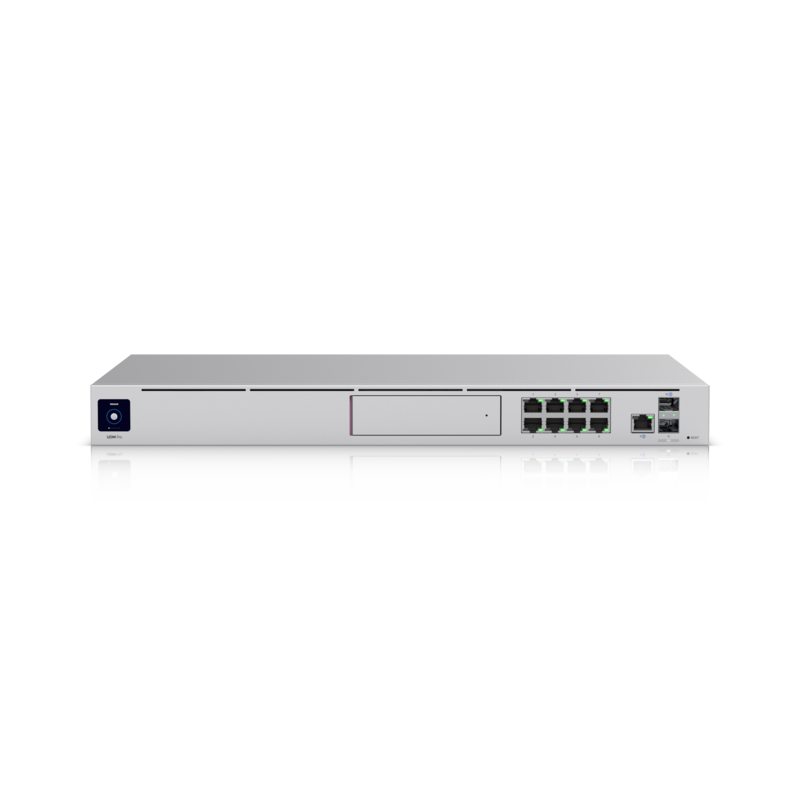
Among the most capable prosumer routers you can buy, from a legitimate US company. A solid B - held from an A by a 2021 insider breach and the expertise required to reach its security ceiling.
- US company (NYSE: UI) - not subject to China's National Intelligence Law
- Enterprise-grade intrusion detection, deep packet inspection, full network visibility
- Active firmware support, FCC authorized, no ban or coverage concerns
- 2021 insider breach: former employee convicted of stealing credentials and attempted extortion - cloud accounts were exposed
- Full security potential requires deliberate setup - defaults are reasonable, but IDS, segmentation, and cloud limits need configuration
- If your cloud account predates 2022: reset your password and enable two-factor authentication now
- 2021 insider data breach: A Ubiquiti employee stole customer data and attempted extortion. Cloud-connected UniFi accounts were potentially affected. Reset your UI account password and 2FA if you haven't since 2021.
- Cloud access expands attack surface: UniFi's remote management is powerful but adds attack surface. If you don't need remote access, disabling cloud management reduces your exposure significantly.
- Complex setup - misconfiguration risk: UniFi's advanced features require correct configuration to work securely. Default configurations may leave unused services exposed.
FCC & Ban Risk
65
/100
B
Supply chain · FCC status · CVEs · Patch support
Security Capabilities
62
/100
C
Zero-Trust · VPN · Segmentation · Monitoring
🏭 Manufacturer
US-headquartered
Ubiquiti Inc., New York, NY - NYSE: UI
Manufactured in: Taiwan / China
🏛️ FCC Status
FCC authorized
Not in scope
🛡️ Patch Support
Active
Whether security vulnerabilities are actively being patched
⚠️ Key Finding
medium
2021 insider data breach
Router Security Updates
Get notified if new vulnerabilities are discovered for your Ubiquiti UniFi Dream Machine Pro. Free, no spam.
🔒
Security capabilities comparison
We benchmark your router against Rio Router across 8 dimensions so you can see exactly what gaps exist - and what a fully-covered setup looks like.
UBIQUITI
your router
Rio Router™
full standard
Zero-Trust Device Admission
Every new device is blocked by default - admin must approve it once, even if it has the right password
Partial
Available
Network Segmentation (VLANs)
Devices on your network are isolated from each other, so a hacked smart TV can't reach your laptop
Available
Available
Router-Level VPN for All Devices
All traffic - including smart devices that can't run VPN apps - is encrypted before leaving your home
Not available
Available
Domain Allowlisting
Block everything except approved sites; more effective than trying to blacklist billions of harmful URLs
Partial
Available
Granular Password Control
Separate passwords per network zone - changing one doesn't affect others
Partial
Available
Guest Auto-Expiry
Guest devices are automatically removed when they leave; neighbors can't reconnect without re-approval
Partial
Available
Clean Supply Chain
Manufactured outside Chinese legal jurisdiction - not subject to China's National Intelligence Law
Available
Available
Active Threat Monitoring
DNS filtering, firewall, activity logs, and ongoing security patch support
Available
Available
We use Rio Router as the benchmark because it’s the only consumer router built to score 8/8 on this framework - it shows you what a fully-covered setup looks like, not just what’s typical.
See Rio →
See all Ubiquiti models: Ubiquiti brand overview →
What you should do
1
Reset your UI account credentials if you haven't since 2021
2
Disable UniFi cloud access if you don't need remote management
3
Keep controller firmware updated via the UniFi app
4
Use IDS/IPS features if you're comfortable with the configuration
How this was scored · verified March 2026: This rating combines FCC authorization status, manufacturer legal jurisdiction, CVEs from NIST NVD, active patch support status, and CISA advisory mentions. See full methodology →
Reference Data
Other Ubiquiti models
See all Ubiquiti models: Ubiquiti brand overview →
Sources & evidence
All findings trace to publicly verifiable primary sources - US government databases, official FCC filings, and NIST CVE records. No proprietary or anonymous sources are used.
Full data source documentation: Scoring Methodology & Citations →